Preferred Sample Type
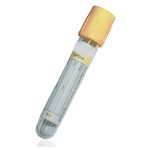
Suitable Specimen Types
- Serum
Sample Processing in Laboratory
Store separated serum at -20ºCSample Preparation
Separate and store at -20ºC.Turnaround Time
21 daysSample Stability
Store at 4 ºC for up to one week. For longer periods store at -20 ºCDexamethasone
General Information
Dexamethasone suppression tests are typically conducted as part of the front line investigations for Cushing's syndrome. Despite having a specificity of 80%, dexamethasone suppression tests can be subject to false positive results due to altered dexamethasone absorption, clearance, cytochrome P450 induction or inhibition or non-compliance with the testing protocol which complicate interpretation.
Simultaneous measurement of dexamethasone and cortisol in serum can assist with identification of false positive dexamethasone suppression tests. When dexamethasone is >3.3 nmol/L, a cortisol of ≤50 nmol/L is typically observed in patients without Cushing's syndrome. Dexamethasone levels of ≤3.3 nmol/L indicate that insufficient dexamethasone is present in circulation to suppress cortisol and a corresponding cortisol ≥50 nmol/L may be a false positive result. In these cirucmstances the test may need to be repeated or an alternative investigation for Cushing's syndrome conducted eg 24 hour urine cortisol.
Patient Preparation
For the 1 mg dexamethasone suppression test, 1 mg dexamethasone is given between 23:00 and 24:00. Samples are collected between 08:00 and 09:00.
Notes
Please note: following a recent change in assay platform, this test has been fully validated and is suitable for clinical use but is not currently included within the laboratory’s UKAS accreditation. Accreditation is pending extension to scope.
Reference Range
>3.3 nmol/L is sufficient to suppress cortisol to ≤50 nmol/L